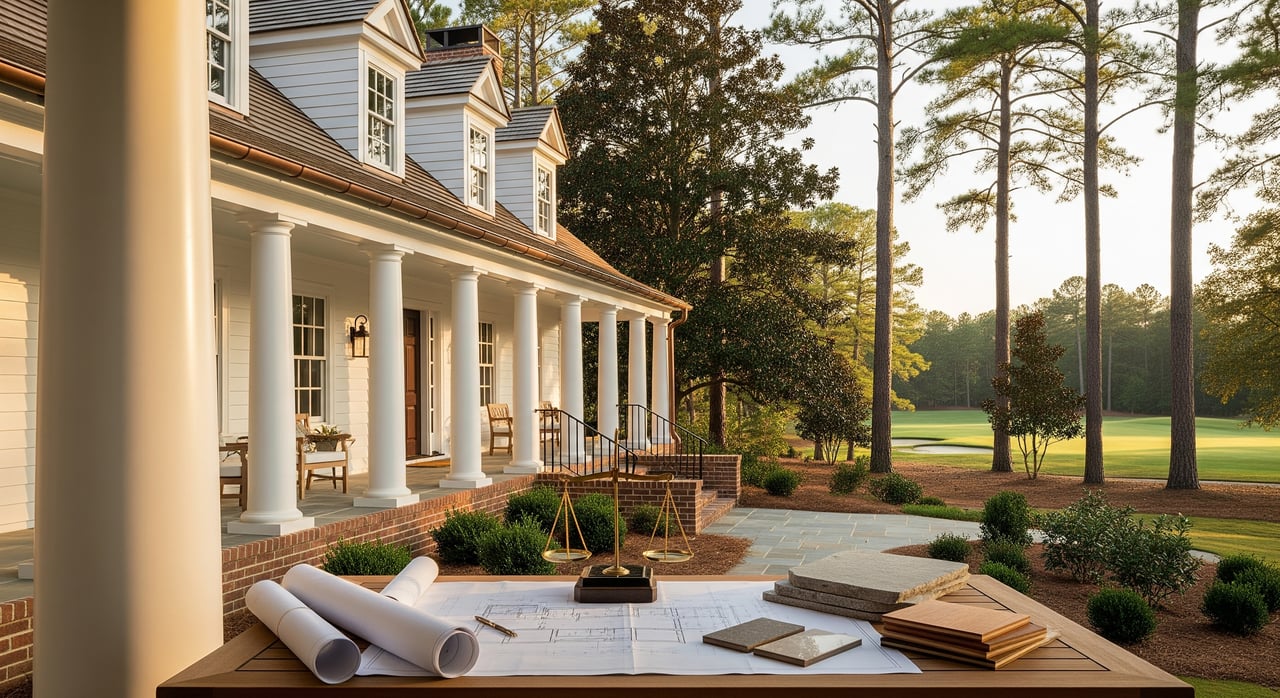
Thinking about updating your home in The Country Club of North Carolina but not sure where to start? You’re not alone. Renovations in CCNC follow a two-track approval process that can feel confusing at first. This guide shows you exactly which approvals you need, who to contact, what to submit, and how long it usually takes so your project moves forward without surprises. Let’s dive in.
The two approvals you need
Neighborhood ARC/ARB
Most CCNC neighborhoods use an Architectural Review Committee to approve exterior changes. You typically submit plans for items like paint, roofs, pools, decks, fences, driveways, and landscaping before any work begins. Example neighborhood guidelines explain scope and submittals in detail, so start with your neighborhood’s rules and checklist. You can review a representative example of ARC requirements in Country Club Village at their architectural design page.
Village or County permits
You also need permits from local government for many projects. The Village of Pinehurst issues building permits, manages zoning rules, and completes inspections for most CCNC properties. Review the Village’s Building & Planning Permits page for what needs a permit, standards for fences and pools, surveys for additions, and how to apply online.
Who to contact first
Start by confirming which ARC governs your lot. The CCNC main office can point you to the correct neighborhood POA and ARC checklist. Use the Club’s contact page to reach the appropriate office.
Next, check with the Village of Pinehurst Planning & Inspections for building permits and inspections. If your property falls outside Village limits or involves county utilities, Moore County may handle some approvals. See Moore County Planning & Inspections for county questions.
Projects and typical approvals
Small exterior changes
Items like exterior paint, minor landscaping beds, small hardscape, and replacement windows usually go to your ARC first. Some façade or roofline changes may also trigger Village review, especially if within a local Historic District. Always follow your subdivision’s ARC checklist and get written approval before work. Reference ARC scope examples at this neighborhood page.
Roof replacement
Most ARCs review roofing materials and colors. Roofing work may require a municipal permit and inspections under the North Carolina State Building Code. Confirm permit needs with the Village on the permits page.
Fences and walls
ARC approval is common for fences and retaining walls. The Village regulates fence types and setbacks, and fences or retaining walls over 18 inches need a permit. Fences are not allowed in golf course or lakefront setbacks, and accessory structures have a minimum 30-foot setback from golf course and lakefront edges. See the Village’s permit guidance.
Pools and pool houses
ARCs typically review pools and accessory structures. The Village lists pools among items that require a building permit, safety features, and inspections. Start with the permits page to understand requirements.
Additions, porches, decks, garages
Expect full ARC review with plans and materials. The Village often requires a current boundary survey for additions, pools, and accessory buildings, along with drawings and inspections. Check the permits page for submittal details.
Driveways and grading
ARC approval is common for driveway expansions and major grading. Municipal permits may be required for driveway changes and increased impervious surface. If you will disturb one acre or more, state law requires an erosion and sedimentation control plan. See the state statute on land-disturbing activity thresholds.
Work near lakes and streams
If you live along Watson Lake, Lake Dornoch, or other CCNC lakes, confirm shoreline setbacks and golf course setbacks before designing any accessory structure, dock, or fencing. The Village’s permit guidance explains relevant standards and setbacks.
Tree removal
Many ARCs require written approval before removing trees or making large landscape changes. If tree work is part of broader land disturbance near or above state thresholds, erosion control rules can apply. Use ARC examples like this page for typical requirements.
Rooftop solar
ARCs often review solar panels. A 2022 North Carolina Supreme Court decision clarified limits on HOA restrictions, protecting reasonable rooftop solar access unless governing documents lawfully and expressly prohibit it. Read the decision in Belmont Ass’n v. Farwig and still seek written ARC approval.
What to include in your submittals
ARC application packet
- Site plan with locations, setbacks, and dimensions
- Elevations, materials, and color samples
- Contractor license and insurance information
- Tree preservation or landscape plan for significant site work. See a representative ARC checklist here.
Village or County permit package
- Construction drawings and structural details
- Boundary survey for new construction, additions, pools, and accessory structures
- Online application through the Village Permit Center. Review submittals at the Building & Planning Permits page.
State erosion control documents
- If disturbing one acre or more, prepare and file an erosion and sedimentation control plan. Allow about 30 days for filing and approval. See the state requirement.
Utilities and water/sewer coordination
- Confirm your water and sewer provider before plumbing work. The Village’s comprehensive plan notes CCNC is an exception in the Village water map and many CCNC homes are served by the Town of Southern Pines system. Review the relevant note in the Village comprehensive plan and coordinate with Moore County or the Town of Southern Pines as applicable.
Timeline: start to final sign-off
- Preliminary planning, 1 to 3 weeks
- Read your recorded covenants and your neighborhood ARC rules. If you are unsure which ARC governs your lot, contact the Club through the CCNC contact page.
- Ask your contractor or architect to prepare ARC and permit drawings at the same time to streamline reviews.
- ARC review, typically 2 to 6 weeks
- Many ARCs meet monthly and require submittals a set number of days in advance. Plan for possible revisions and resubmittals based on feedback.
- Municipal permit review, days to several weeks
- Apply online through the Village Permit Center. Larger projects may route through technical review. Inspection milestones include footing, framing, and final. See the Village’s Building Inspections page for scheduling and 24-hour notice.
- Erosion control, if applicable
- If disturbing one acre or more, submit your erosion plan early since approval can take about 30 days. See the state threshold.
- Final inspections and ARC close-out
- Pass all inspections before occupancy or final landscaping that requires inspection. Keep copies of permits and approvals handy, since ARCs often request them for their records. For Village inspection information, visit Building Inspections.
Fees, enforcement, and risk
The Village of Pinehurst publishes planning and permit fees. Expect plan review, permit, and inspection fees, and possible utility or system development charges for water and sewer work. For current fee references, start with Village Planning.
Working without approvals can lead to ARC fines, requirements to remove or correct unapproved work, stop-work orders, and enforcement actions for code or stormwater violations. Protect your budget and timeline by securing ARC approval and permits before starting any exterior work.
CCNC-specific tips to save time
- Confirm your water provider early. Many CCNC homes are served by the Town of Southern Pines, not the Village system. See the note in the Village comprehensive plan.
- Verify which code edition applies at permit submittal. North Carolina updates building code editions on a state schedule. Check the latest statewide notice from the Office of State Fire Marshal here and confirm with the Village.
- If you are in Pinehurst’s local Historic District, additional review or a Certificate of Appropriateness may apply. Start at the Village’s Building & Planning Permits page for guidance.
Quick homeowner checklist
- Read your neighborhood ARC guidelines and covenants.
- Confirm the correct ARC and manager through the CCNC office.
- Gather a site plan, elevations, materials, and color samples.
- Prepare permit drawings and a current boundary survey if needed.
- Apply for ARC approval and Village permits before work.
- If disturbing one acre or more, file an erosion and sediment control plan.
- Keep permits on site. Schedule inspections with 24-hour notice.
- Save final approvals for your ARC records.
Ready to plan your renovation?
You can protect your timeline and investment by securing the right approvals in the right order. If you want a local perspective on how renovations impact resale value in CCNC and Pinehurst, reach out. For neighborhood-savvy guidance and market insight, connect with Kelly Ward KW Realty.
FAQs
In CCNC, what approvals do I need before exterior work?
- You typically need your neighborhood ARC/ARB’s written approval and the Village of Pinehurst permit if the work requires one; both tracks are separate and usually required.
Who tells me which ARC governs my lot in CCNC?
- Contact the Club through the CCNC main office to confirm your neighborhood POA and ARC so you can use the correct checklist and contacts.
Do I need a survey for an addition in Pinehurst?
- The Village often requires a current boundary survey for additions, pools, and accessory buildings as part of the permit submittal.
What if my project disturbs one acre or more in Pinehurst?
- State law requires an erosion and sedimentation control plan for land-disturbing activity at or above one acre; allow about 30 days for filing and approval.
Are fences allowed along CCNC golf or lake setbacks?
- The Village restricts fences in golf course and lakefront setbacks and regulates fence types and locations; check the permit standards before designing.
Can an HOA stop me from installing rooftop solar in CCNC?
- ARCs review solar, but a 2022 North Carolina Supreme Court decision limits HOA restrictions unless governing documents expressly and validly prohibit rooftop solar; seek written ARC approval with this context in mind.